
Tiny Touches, Real Results: Why Small Details Build Better Products

When people talk about building better products, they often talk about big ideas: bold features, new technologies, or breakthrough strategies. But after completing HP LIFE’s Customer Experience (CX) for Business Success) course, I’m more convinced than ever that real growth doesn’t just come from what’s big – it comes from what’s often overlooked: the small details.

What the Course Taught Me

This CX course broke down how deeply customer experience ties into product success  and how thoughtful details can shape loyalty, trust, and growth.

A few ideas really stuck with me:

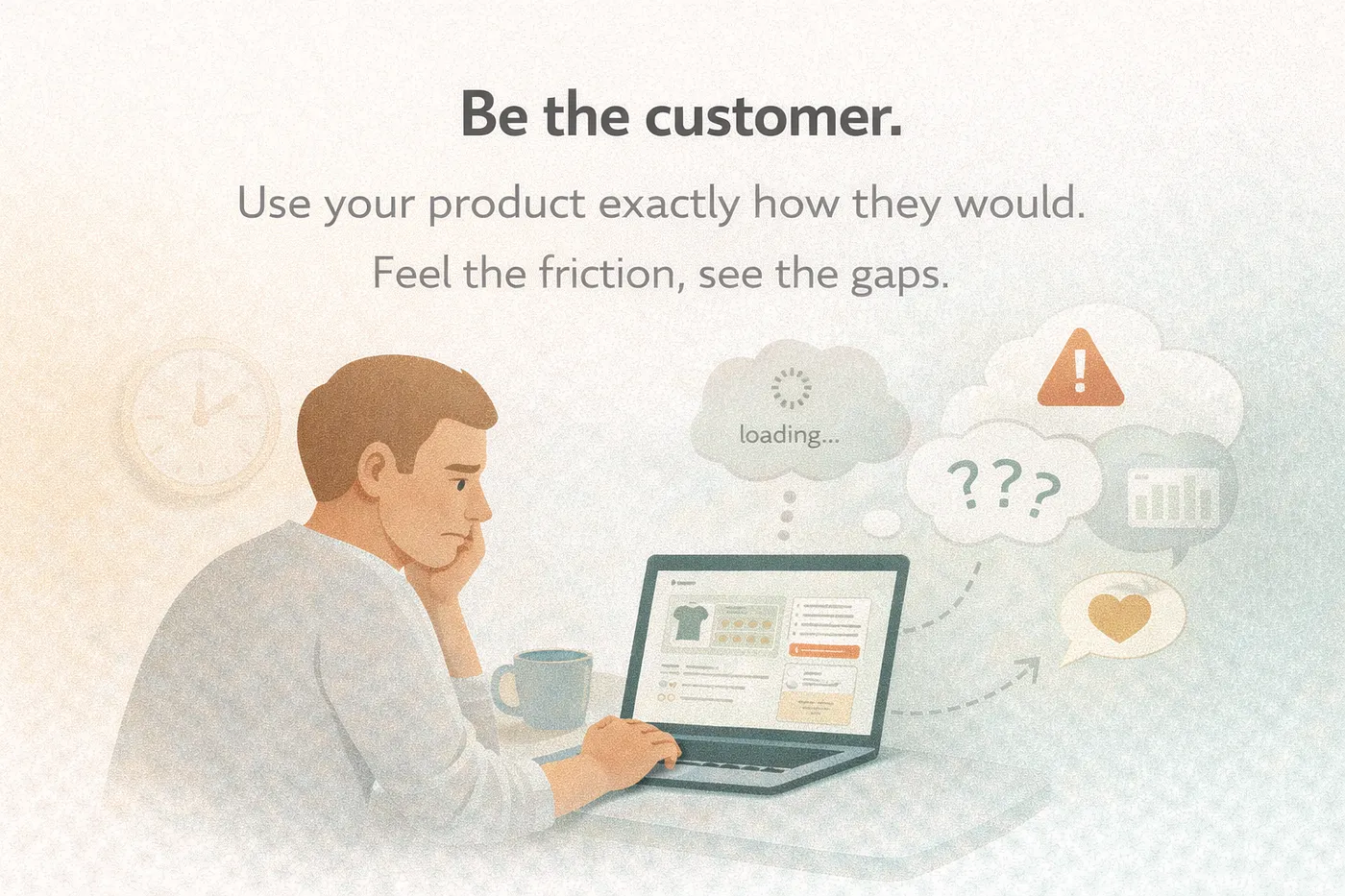
✅ Be the customer.

One of the most powerful ways to improve a product is to stop thinking like a designer or developer—and start thinking like a user. When you experience your product exactly the way a customer would, you begin to notice the small frictions that are otherwise invisible: confusing flows, unnecessary steps, unclear messaging, or moments where things just don’t “feel right.” These gaps often don’t show up in design files or meetings—they only appear when you actually use the product end-to-end. This shift in perspective helps you build empathy, which is the foundation of truly great user experiences.

How to implement:

  1. Go through your product like a first-time user (no shortcuts)
  2. Complete key tasks (signup, purchase, onboarding) step-by-step
  3. Note every moment of confusion, delay, or hesitation
  4. Record your screen while using it, you’ll catch more issues later
  5. If possible, test on different devices and real-world conditions (slow internet, mobile, etc.)


Think: If I didn’t build this, would I still understand and enjoy using it?
 

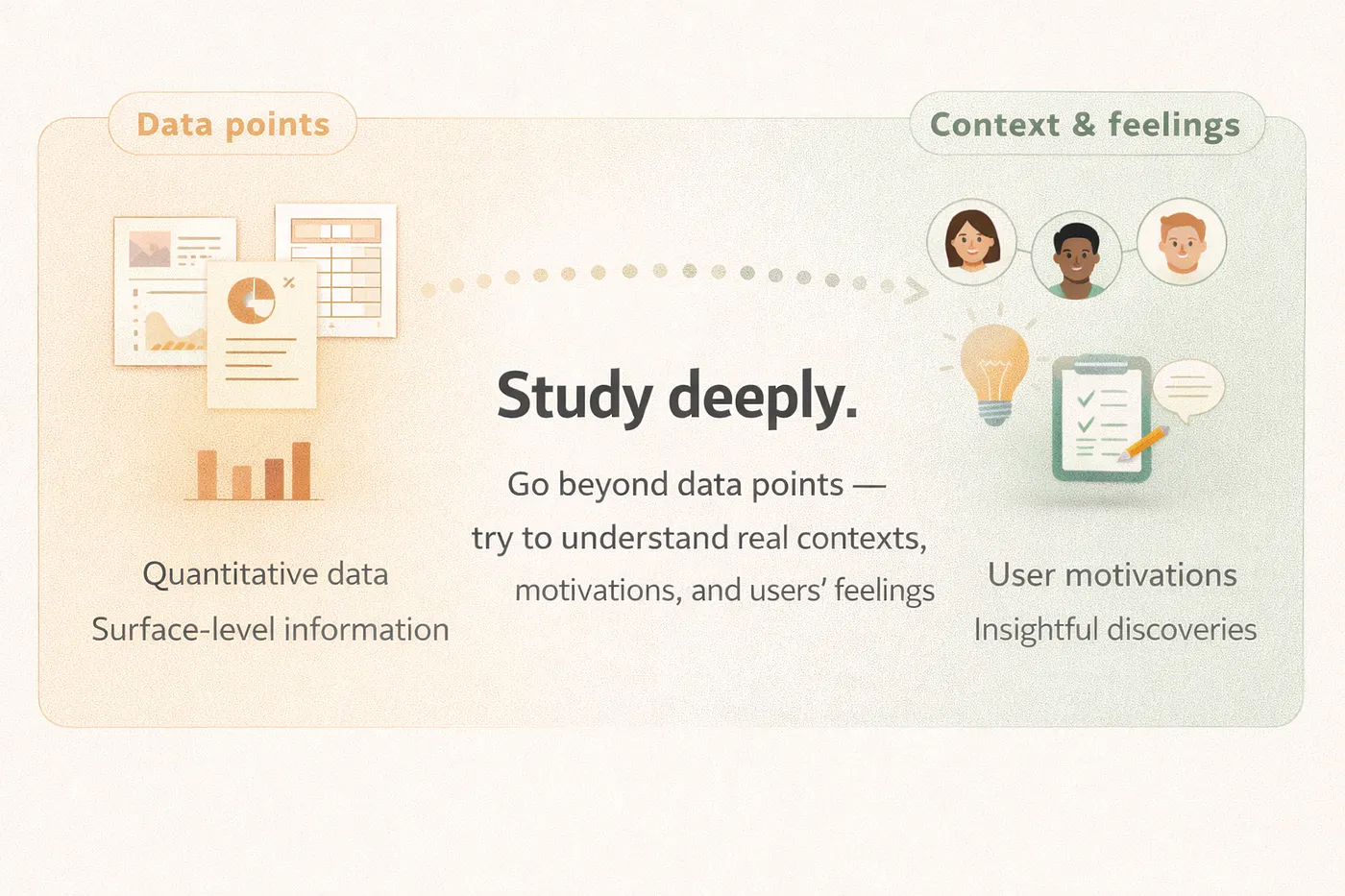
✅ Study deeply.

Great products aren’t built by just looking at numbers—they’re built by truly understanding people. Data can tell you what is happening, but it rarely explains why it’s happening. To design meaningful experiences, you need to go beyond surface-level insights and explore the real context in which users interact with your product—their goals, frustrations, habits, and emotions. When you understand what users are feeling at each step, you can design solutions that actually resonate, not just function.

How to implement:

  1. Combine quantitative data (analytics, drop-offs) with qualitative insights (user interviews, feedback)
  2. Talk to real users—ask about their goals, struggles, and expectations
  3. Observe how they use your product in real scenarios (not ideal conditions)
  4. Create user personas or journey maps to capture motivations and pain points
  5. Look for patterns in behavior, not just isolated metrics


Think: Don’t just analyze actions, understand the reasons behind them.


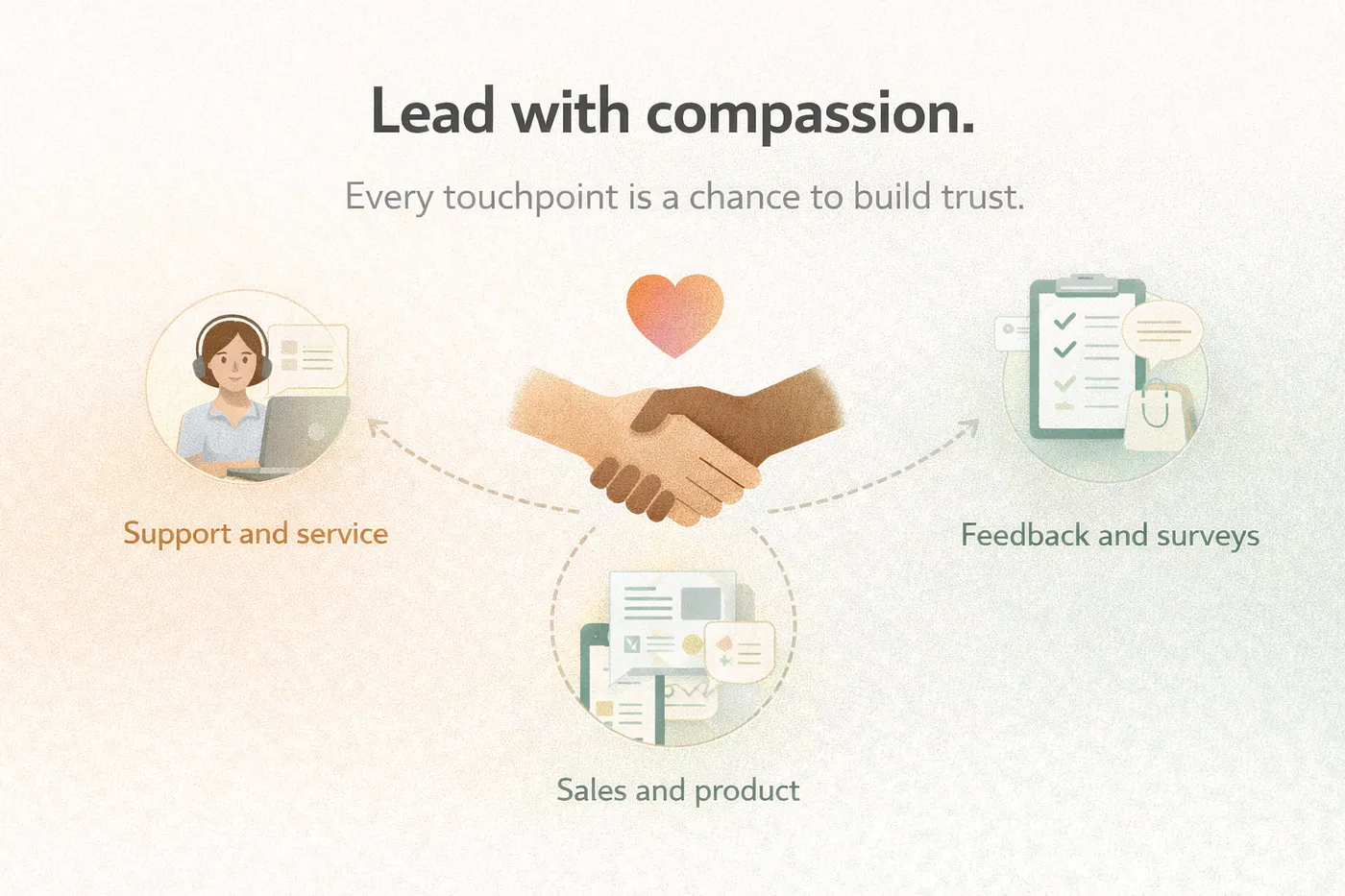
✅ Lead with compassion.

Great products aren’t just efficient—they’re empathetic. Every interaction a user has with your product is an opportunity to either build trust or lose it. When you design with compassion, you start considering the user’s state of mind: Are they confused? Frustrated? In a hurry? Stressed? Instead of just guiding them through a flow, you support them through the experience. This human-centered approach makes users feel understood, and that emotional comfort is what builds long-term trust and loyalty.

How to implement:

  1. Write supportive, human-centered microcopy (especially in errors and edge cases)
  2. Avoid blaming language (“You did this wrong”) → guide instead (“Here’s how to fix it”)
  3. Design for stressful moments (payment failures, form errors, slow loading)
  4. Add reassurance where users may feel uncertain (progress indicators, confirmations)
  5. Always ask: How would the user feel at this moment, and how can I make it easier?


Think: Every screen is not just a step—it’s a conversation.

 
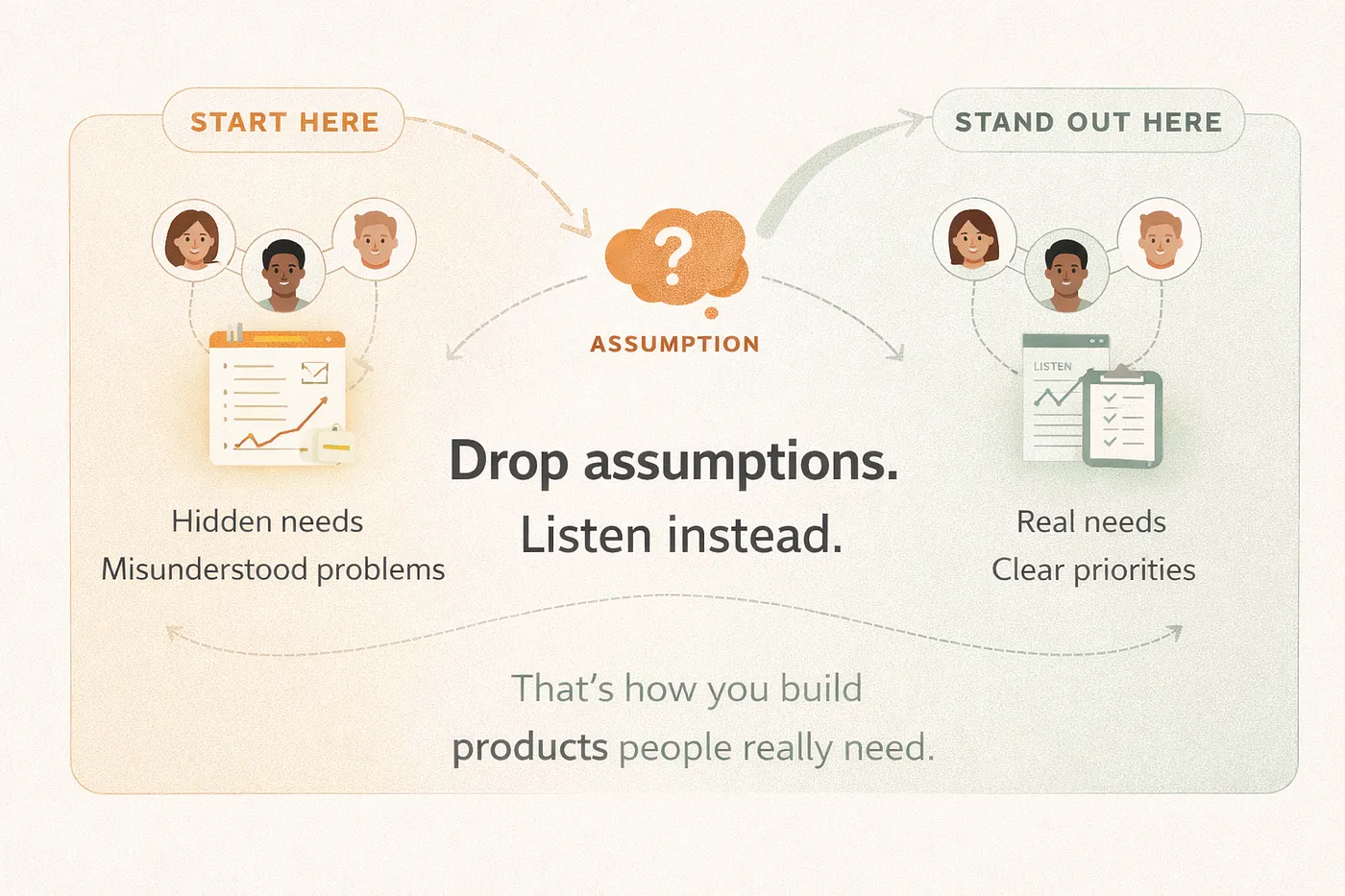
✅ Drop assumptions.

Assumptions are one of the biggest blind spots in product design. It’s easy to believe we already know what users want—based on our experience, logic, or trends—but these assumptions often lead to misaligned solutions. What feels obvious to us may not reflect real user needs at all. When we rely on assumptions, we design for ourselves, not for the people actually using the product. The real insights come from listening, observing, and validating—not guessing.

How to implement:

  1. Validate ideas before building (quick user feedback, prototypes, surveys)
  2. Replace “I think users want…” with “Users told us…”
  3. Conduct usability testing to see real behavior, not expected behavior
  4. Pay attention to where users struggle—it often contradicts assumptions
  5. Stay open to being wrong—that’s where the best improvements come from


Think: Don’t design based on what you believe—design based on what you learn.


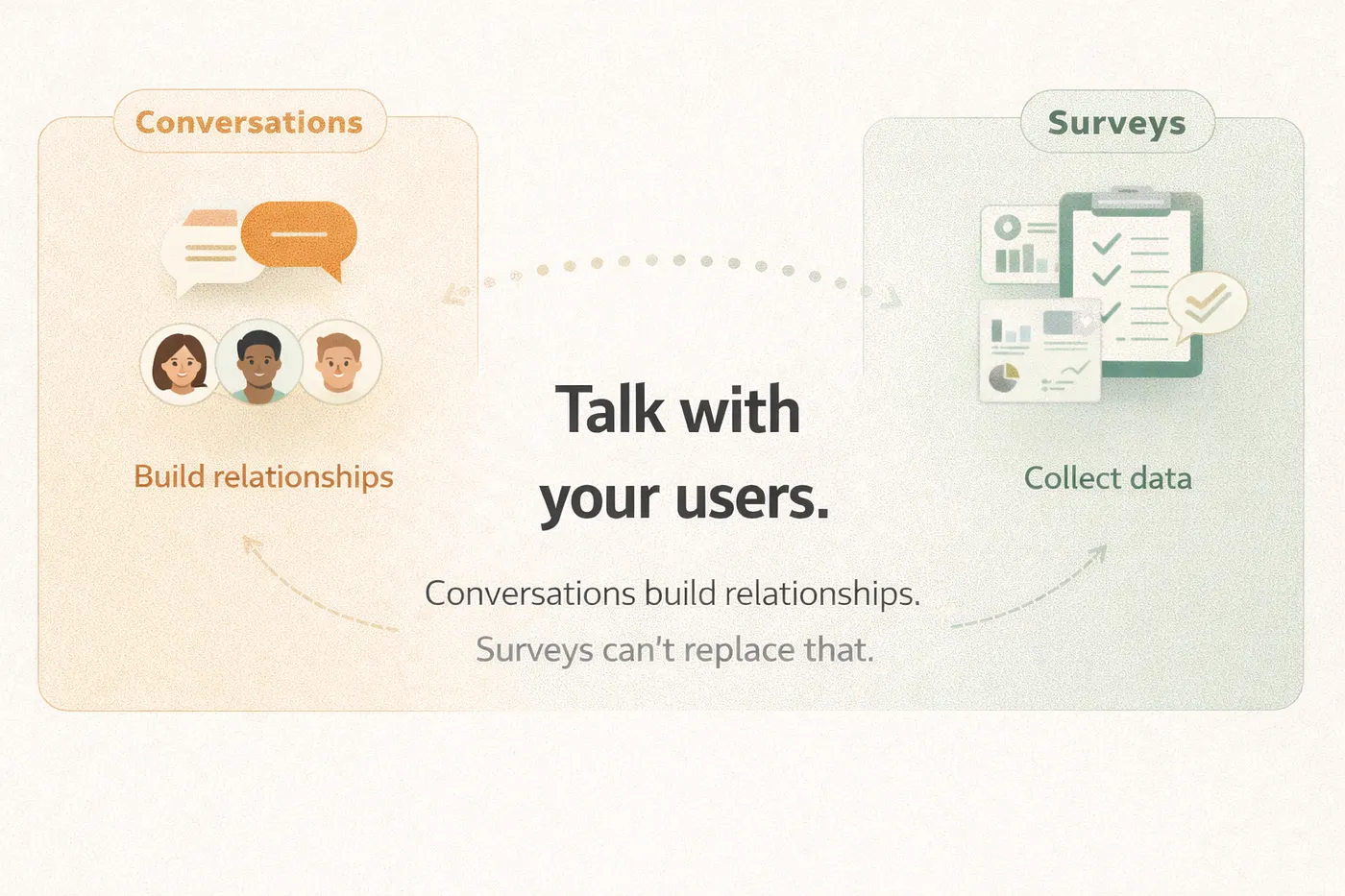
✅ Talk with your users.

Real understanding doesn’t come from dashboards—it comes from conversations. While surveys and analytics give you patterns, they often miss the depth of human experience. Talking directly with users helps you uncover their real thoughts, emotions, and stories—the “why” behind their actions. These conversations not only reveal hidden pain points and unmet needs but also build a genuine relationship between you and your users. When people feel heard, they’re more likely to trust, engage, and stick with your product.

How to implement:

  1. Schedule short 1:1 user calls or informal interviews
  2. Ask open-ended questions (“What frustrated you the most?” instead of yes/no)
  3. Let users speak more—don’t interrupt or lead their answers
  4. Focus on listening, not defending your product
  5. After conversations, document key insights and recurring patterns


Think: Data shows behavior, but conversations reveal truth.


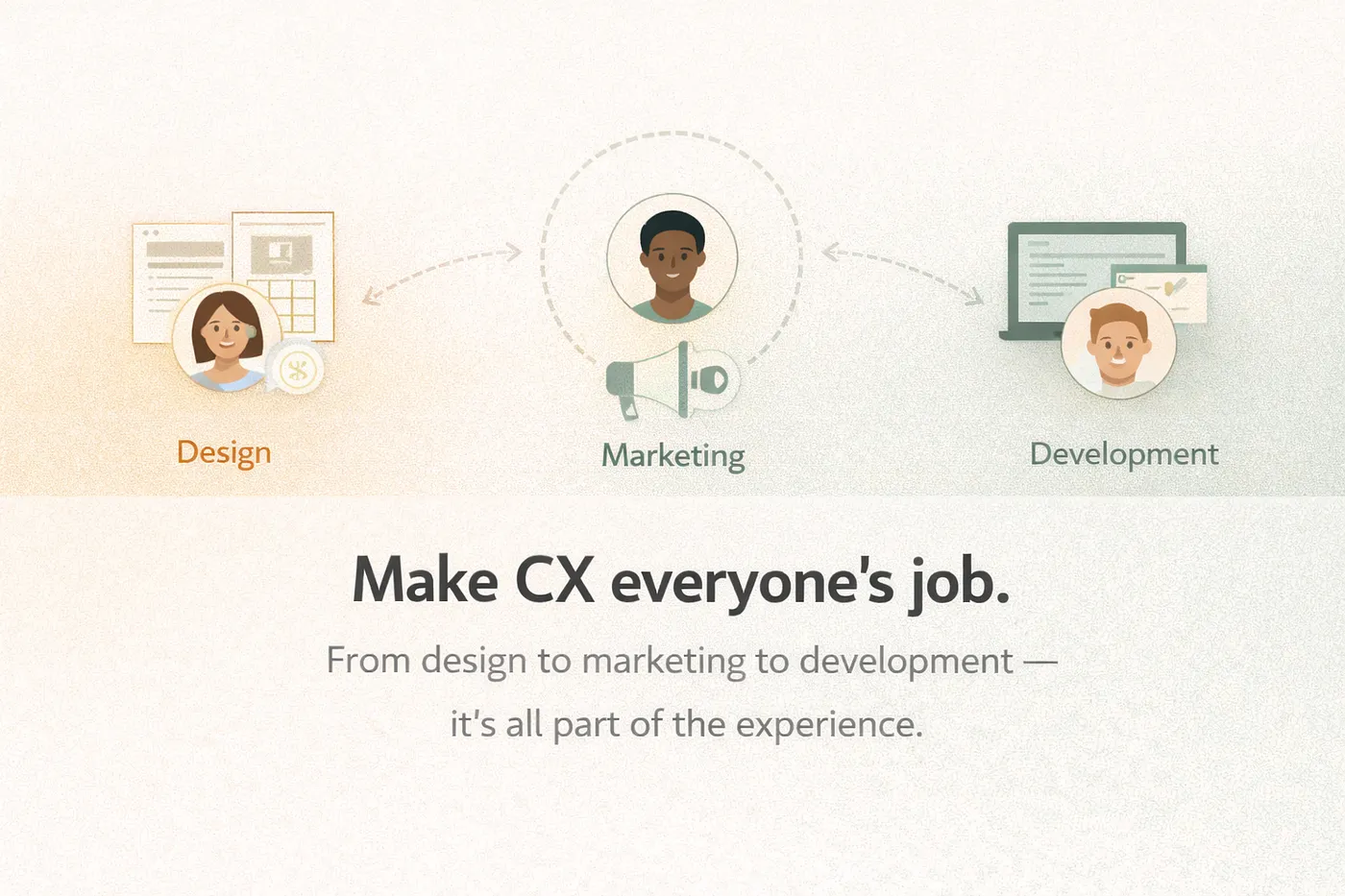
✅ Make CX everyone’s job.

Customer experience isn’t owned by just one team—it’s shaped by everyone involved in building and delivering the product. From design decisions to development quality to marketing promises, every touchpoint contributes to how users perceive your product. When CX is treated as a shared responsibility, the experience becomes more consistent, intentional, and impactful. But when teams work in silos, gaps start to appear—what’s promised isn’t delivered, and what’s built doesn’t align with user expectations.

How to implement:

  1. Align all teams (design, dev, marketing, support) around a shared user experience goal
  2. Ensure messaging matches the actual product experience (no overpromising)
  3. Involve developers early in design discussions to maintain quality in execution
  4. Share user feedback and insights across teams regularly
  5. Encourage everyone to think from the user’s perspective, not just their role


Think: Customer experience isn’t a department—it’s a culture.


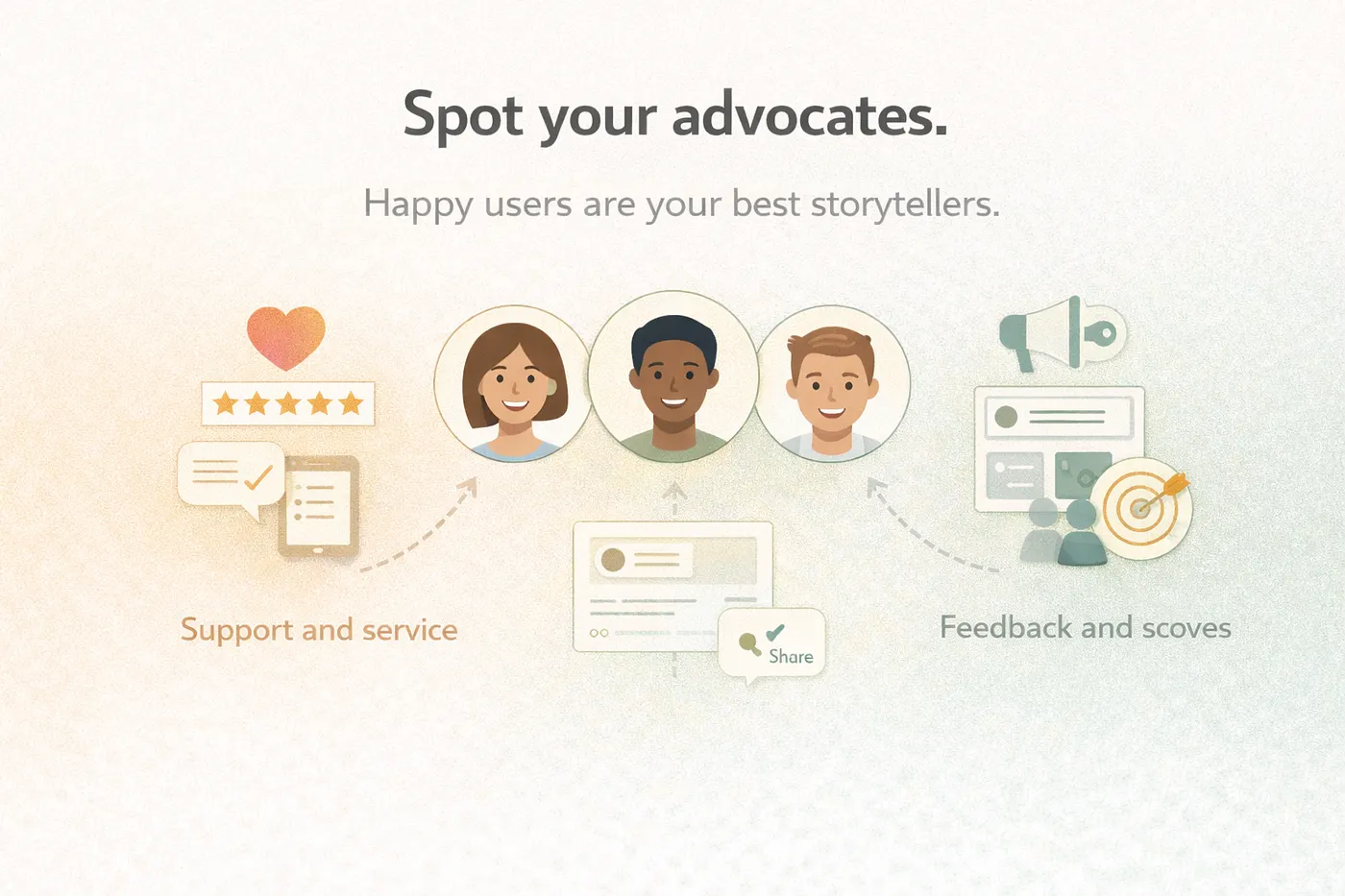
✅ Spot your advocates.

Not all users are equal—some genuinely love your product, talk about it, and recommend it to others. These are your advocates, and they’re far more powerful than any paid marketing. They’ve already experienced value, built trust, and are willing to share their positive experiences. Identifying and nurturing these users can turn them into loyal supporters who amplify your product organically and authentically.

How to implement:

  1. Identify highly engaged users (frequent usage, positive feedback, referrals)
  2. Reach out personally—thank them and understand what they love most
  3. Encourage testimonials, reviews, or case studies
  4. Give them early access to new features or exclusive perks
  5. Build a small community (Discord, WhatsApp, email group) to stay connected


Think: Your best growth strategy isn’t ads – it’s happy users who talk.


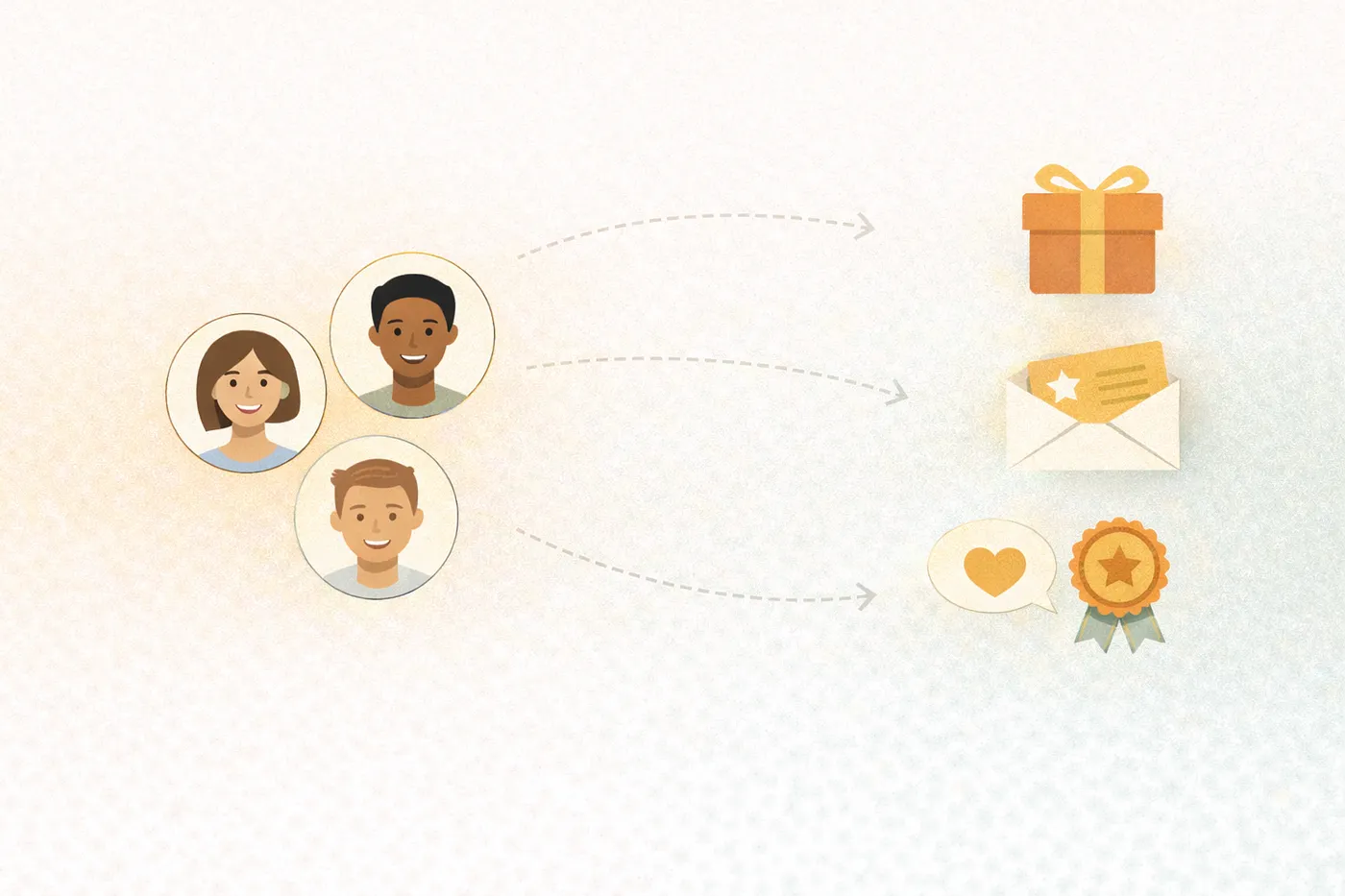
✅ Reward loyalty.

Loyal users are the foundation of long-term growth, yet they’re often overlooked once they convert. Retention isn’t just about keeping users—it’s about making them feel valued. Small, thoughtful gestures of appreciation can strengthen emotional connection and turn regular users into lifelong supporters. When people feel recognized, they’re more likely to stay, engage, and advocate for your product.

How to implement:

  1. Offer small rewards (discounts, credits, exclusive content) for repeat usage
  2. Send personalized thank-you messages or milestone acknowledgments
  3. Create loyalty perks (early access, beta features, priority support)
  4. Celebrate user achievements or milestones within your product
  5. Occasionally surprise users- unexpected appreciation has the biggest impact


Think: People don’t just stay for value—they stay where they feel valued.


The Hidden Power of Fine Details

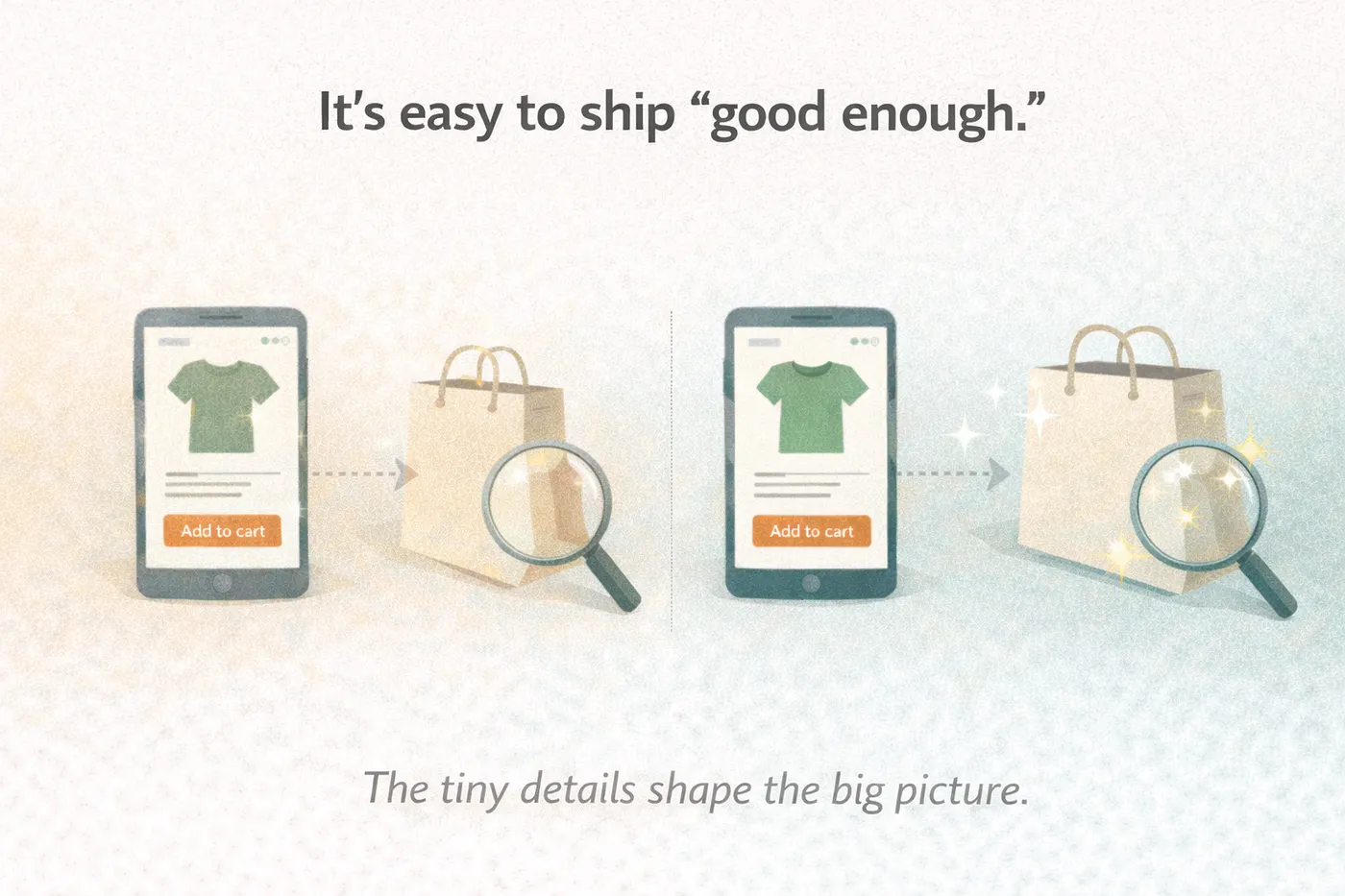
It’s easy to ship something that works. But what truly separates average products from memorable ones is the attention given to the smallest details. The brands people connect with aren’t just functional—they feel human, intentional, and refined. That feeling doesn’t come from big features alone; it comes from polishing the rough edges that most people overlook. When every interaction feels smooth, every message feels thoughtful, and every flow feels effortless, users may not consciously notice why—but they remember how it made them feel.

As a designer, this is where your real edge lies. Anyone can design a working interface, but not everyone takes the time to refine it. Thoughtful micro-interactions, cleaner user flows, empathetic messaging, sharper onboarding experiences, and clear microcopy are not just “nice to have”—they are what transform a product from usable to lovable. These details reduce friction, build trust, and create a sense of care.

How to implement:

  1. Do a “detail pass” after your main design is done—focus only on refinement
  2. Improve microcopy (make it clear, human, and helpful)
  3. Add meaningful micro-interactions to key actions
  4. Simplify flows by removing unnecessary steps
  5. Refine onboarding to guide users smoothly from start to value


Think: It’s not the big features that make users stay- it’s how effortlessly everything works together.


If there’s one thing I’d share with any founder, designer, or builder, it’s this: good enough is temporary. It might help you ship faster, but it rarely helps you stand out. What truly compounds over time are the small, intentional improvements – the tiny refinements that make your product smoother, clearer, and more human with every iteration. These changes may feel insignificant in isolation, but together, they shape how people perceive and remember your product.

When you take the time to get the details right, users feel it. They notice when a flow is effortless, when a message actually helps instead of confusing them, when an interaction responds just the way they expect. That feeling builds trust. And trust is what turns first-time users into loyal ones. It’s also what separates products people use from products people recommend.

The best part? Details don’t demand massive resources – they demand intention. You don’t need a bigger budget to care more. You need a sharper eye to spot friction, a mindset that values refinement, and the willingness to listen to what users are really experiencing.

Because in the end, great products aren’t built through one big breakthrough -they’re built through hundreds of small decisions, made with care.

If you’re also building things that put real people first - not just features or KPIs : let’s connect. I’d love to hear how you keep the small details alive in your work too. Tiny touches. Real results.

Satyam Anand

Product/UIUX Designer

Leave a Reply

Your email address will not be published. Required fields are marked *